Unbound Library
A growing public library of free, practical guides, PDFs, and resources for preparedness, self-sufficiency, local knowledge, and everyday skills.
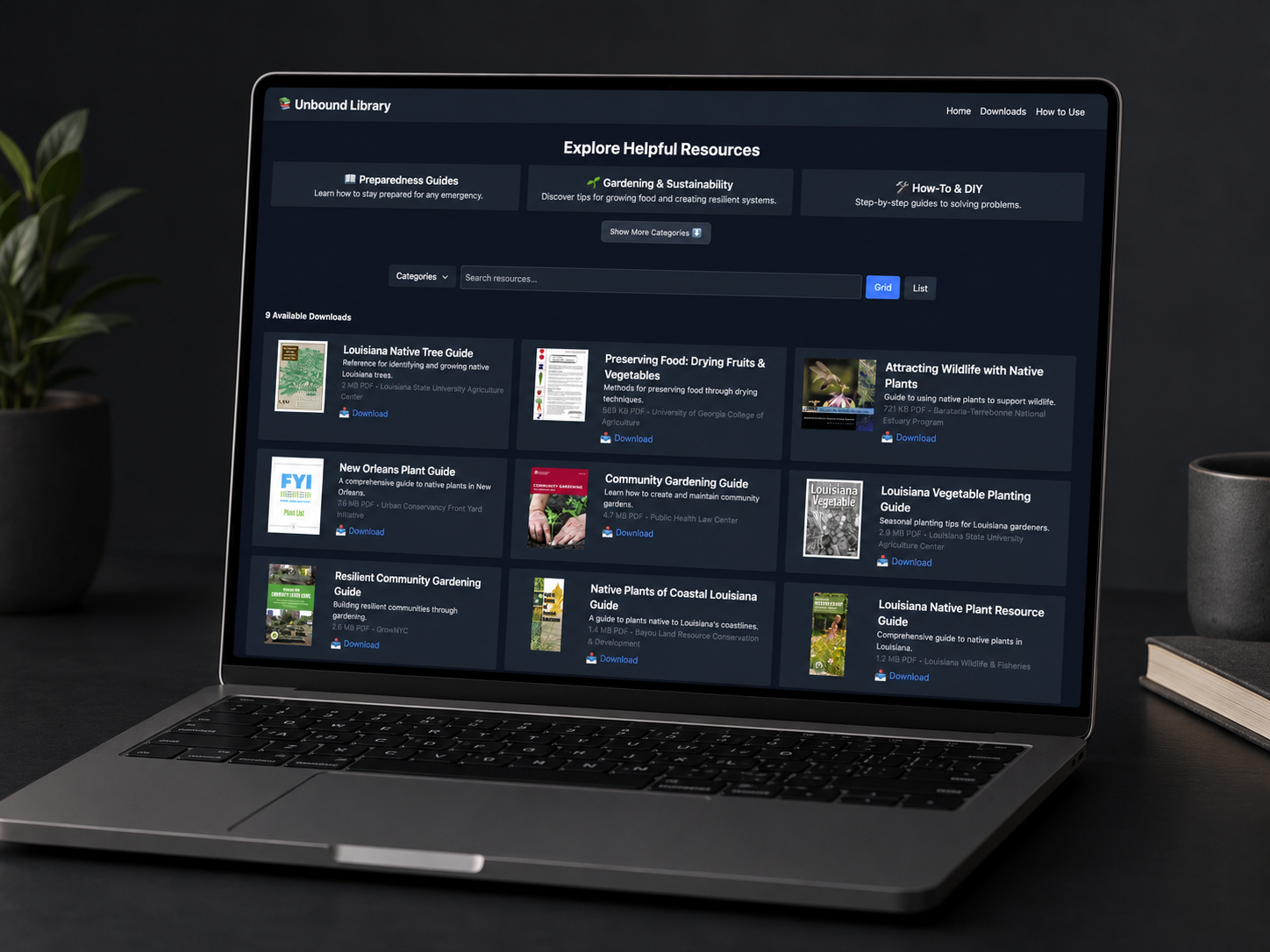
Unbound Library is a self-initiated public resource project built around free, practical, legally shareable PDFs and guides.
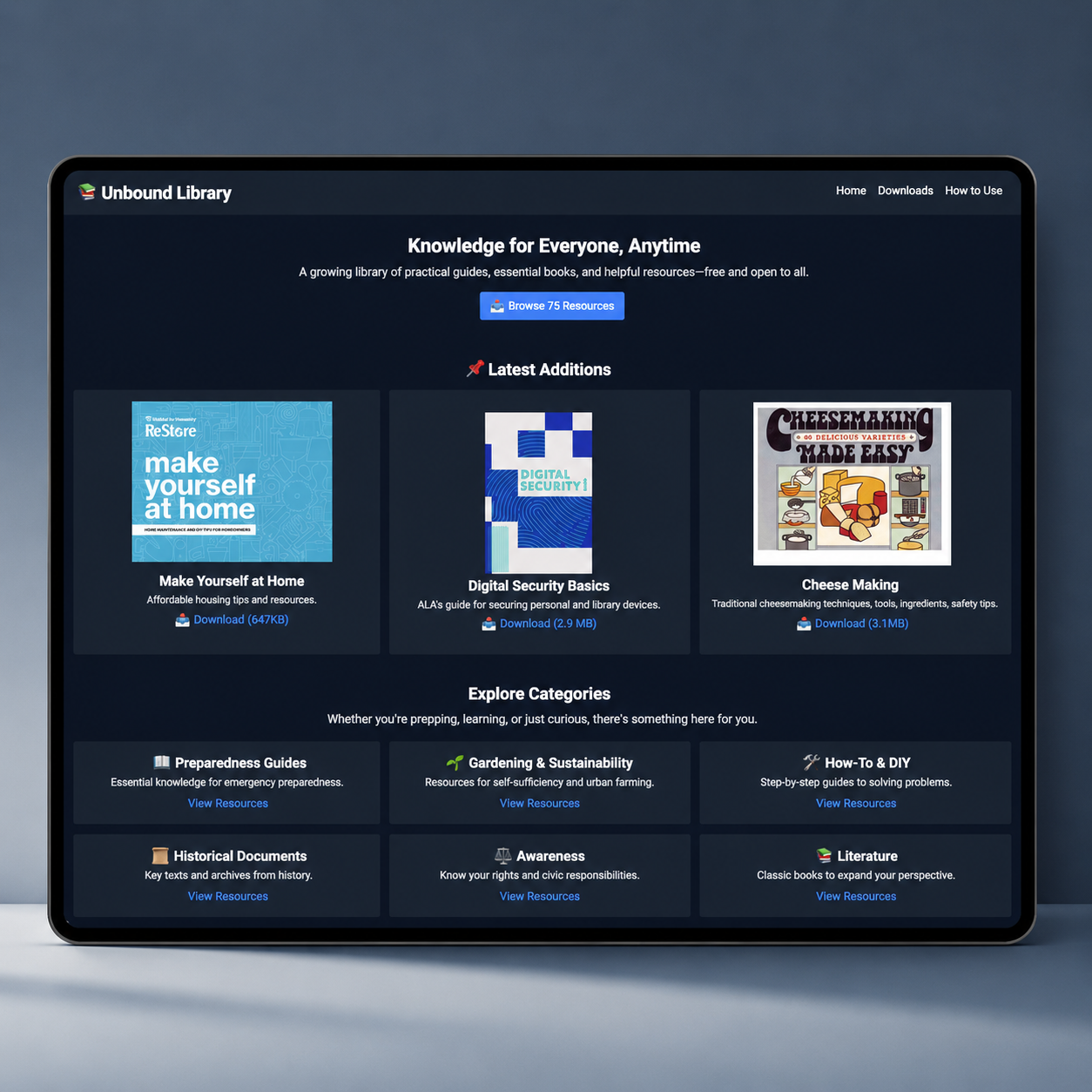
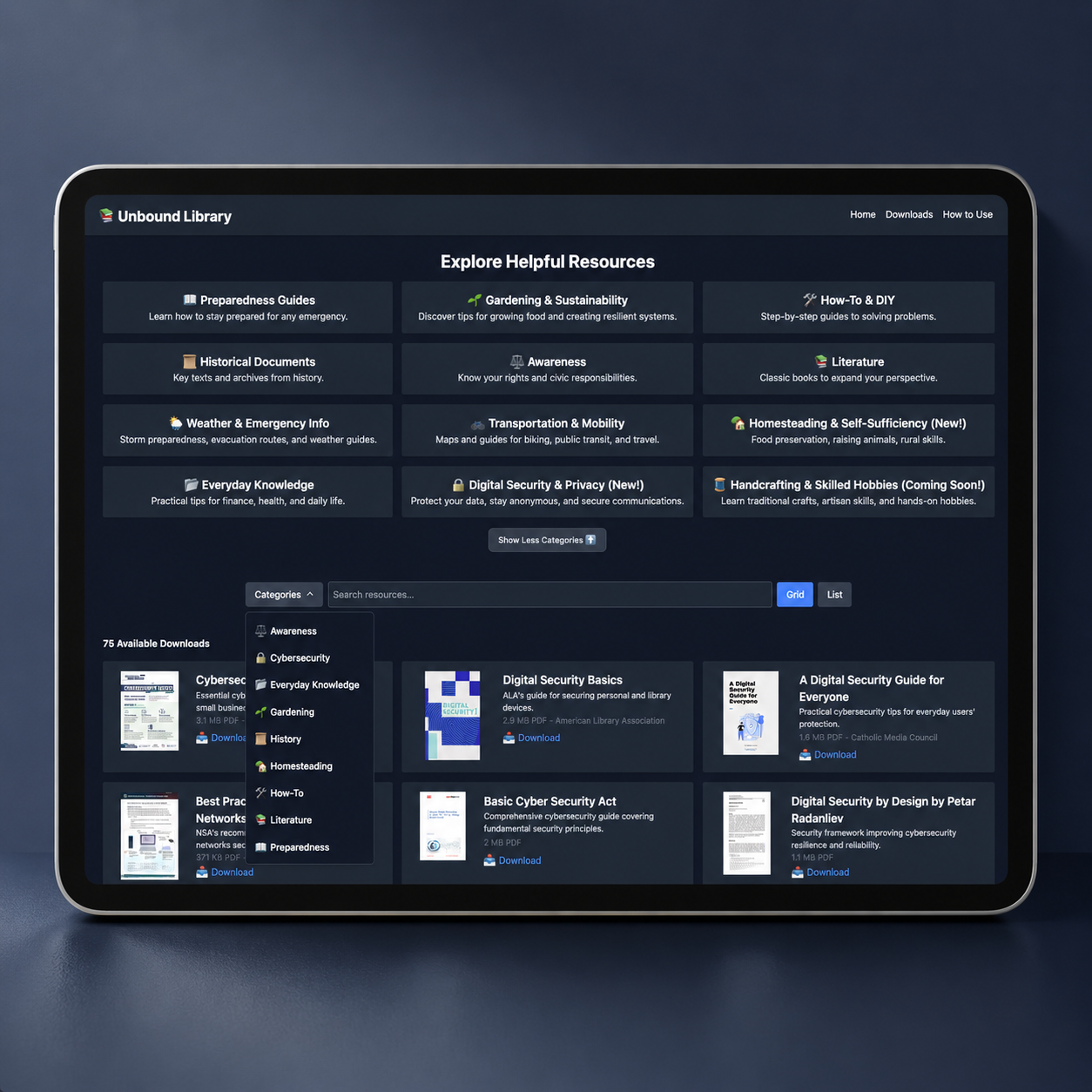
The goal was to create a small, accessible library of useful information: preparedness guides, gardening and sustainability resources, how-to documents, historical texts, digital privacy guides, transportation references, everyday knowledge, and local New Orleans / Louisiana resources.
I started by collecting and organizing public-domain, government, university, nonprofit, and otherwise shareable resources into a searchable download library. The project grew into a structured web app with categories, downloadable PDF cards, search, filtering, grid/list views, category counts, and a dark visual interface designed to make practical documents easier to browse.
The project also expanded beyond the website into ideas for printable mini booklets, zines, local flyers, preparedness packets, and small-format reference materials that could be shared offline.
Unbound Library is part digital archive, part preparedness shelf, and part civic resource experiment. It gave me a place to combine information architecture, web publishing, resource curation, lightweight front-end development, public-interest design, and ongoing content maintenance.
Visit Unbound Library →
What I worked on
Defined the concept for a free public resource library
Collected and reviewed legally shareable PDF resources
Organized resources into practical categories
Added local New Orleans and Louisiana-specific materials
Designed the site structure, visual direction, and resource card system
Built search, filtering, category browsing, grid/list views, and category counts
Added downloadable PDF cards with titles, descriptions, file sizes, sources, and thumbnails
Used AI-assisted workflows to speed up resource organization, description writing, code troubleshooting, formatting, and maintenance tasks
Expanded the library from an early small set into a larger multi-category collection
Explored print/offline extensions including mini booklets, flyers, zines, and preparedness packets
Set up basic analytics and site protection tools to keep the project usable and maintainable
AI-assisted workflow
AI tools became part of the project workflow as the library grew. I used ChatGPT to help organize resource categories, refine descriptions, format resource metadata, troubleshoot HTML/CSS/JavaScript updates, and speed up repetitive content work.
The workflow also supported image formatting, file organization, interface copy, category planning, print/zine ideas, and maintenance tasks around hosting, analytics, Cloudflare settings, and site updates. Rather than using AI to replace the design process, I used it as a working assistant to move faster through research, formatting, coding support, and content organization.
Tools, services, and utilities
GitHub Pages for hosting
GitHub for version control and publishing
Cloudflare for DNS, domain management, and WAF/security rules
HTML, CSS, and JavaScript
VS Code for editing
Google Analytics for basic traffic visibility
Public-domain, government, university, nonprofit, and public-interest PDF sources
ChatGPT for brainstorming categories, refining descriptions, writing interface copy, organizing resource ideas, and planning printable/offline extensions